






What is the Best Desk Top Material
The desktop material plays a key role in a desk’s functionality, appearance and durability. Whether you are setting up a home office, a study space for children or a gaming setup, choosing a suitable desktop material is important.
There is no single best choice for everyone. Solid wood suits users who value natural character and long-term use, plywood offers a practical balance of strength and cost, while MDF and MFC are affordable and easy to incorporate into modern workspaces. The right option also depends on the desk frame, equipment weight, room conditions and the amount of maintenance you are prepared to do.

Which Desktop Material Is Best?
Solid wood is often the best choice for a premium home office, while plywood provides a more affordable combination of strength and stability. MDF offers a smooth surface for painted designs, and MFC is practical when easy cleaning and a lower price matter most.
Desktop Materials at a Glance
|
Material |
Best for |
Main advantage |
Main limitation |
|
Solid wood |
Premium home offices |
Natural appearance and long-term character |
Higher cost and weight |
|
Plywood |
Balanced everyday use |
Good strength and stability |
Finish quality varies |
|
MDF |
Painted or smooth desktops |
Flat and affordable |
Sensitive to moisture |
|
MFC |
Budget and shared offices |
Easy to clean |
Difficult to repair if chipped |
|
Bamboo |
Light, natural setups |
Lightweight and distinctive |
Softer than many hardwoods |
|
Metal or glass |
Design-led spaces |
Modern appearance |
Less practical for daily use |
Common Desk Top Materials
1. Solid Wood
Solid wood desk tops are loved for their natural texture and elegant look. They add warmth and style to any room and are also considered eco-friendly. Here are some popular types of solid wood and their characteristics:
- Walnut: Known for its dark, rich color and fine grain, walnut gives a luxurious and classic feel, perfect for executive desks or high-end home offices.
- Cherry: Its color ranges from light pink to deep red and darkens over time, giving it a warm tone, which is ideal for traditional furniture.
- Maple: Light in color and very hard, maple is durable and scratch-resistant, making it a great choice for modern desks.
- White Oak: Strong and durable with a coarse grain, it's suitable for industrial or rustic-style desks.
- Red Oak: Slightly darker than white oak, with more pronounced grain, it's perfect for classic styles.
- Ash: Known for its elasticity and strength, ash wood has a smooth appearance and is often used for high-end furniture.
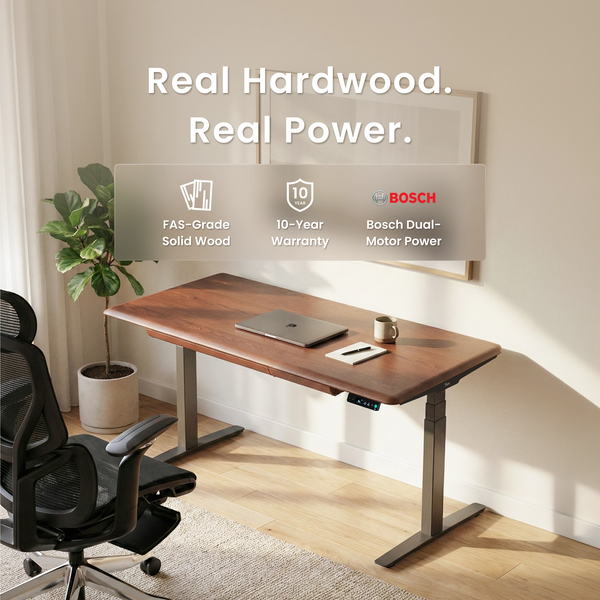
Solid hardwood is commonly graded according to the amount and quality of clear timber available from each board. FAS-grade timber can provide wide, visually consistent sections, but the finished desktop quality also depends on drying, construction and surface treatment.
For users who prefer the grain and individual character of real timber, the 9amHome Pesk Pro Hardwood Standing Desk pairs an FAS-grade hardwood desktop with a Bosch dual-motor frame. It suits home offices where appearance and long-term use matter more than keeping the initial cost as low as possible.
You can also compare other hardwood standing desk options if you want a natural desktop without sourcing and fitting the timber separately.

2. Plywood
Plywood is made from bonded layers of wood veneer and provides a strong, relatively stable alternative to solid timber.
Its layered construction can reduce some of the expansion and movement associated with solid wood. However, appearance, moisture resistance and scratch resistance depend heavily on the outer veneer, edge treatment and surface finish. Exposed plywood edges may be used as a design feature or covered with edge banding for a more finished appearance.

3. MDF and MFC
MDF, or medium-density fibreboard, has a smooth and consistent surface that is easy to shape, paint or cover with a decorative finish. It is generally affordable but is less suitable for areas where the edges may be exposed to moisture.
MFC is made from particleboard covered with a melamine surface. It is affordable, scratch-resistant under normal office use and easy to clean, making it common in practical home and corporate furniture.
MDF and MFC are not interchangeable. MDF is useful when a smooth painted finish is required, whereas MFC arrives with a ready-to-use decorative surface. With either material, check the desktop thickness before installing screws or a monitor arm, and prevent water from sitting around exposed or damaged edges.
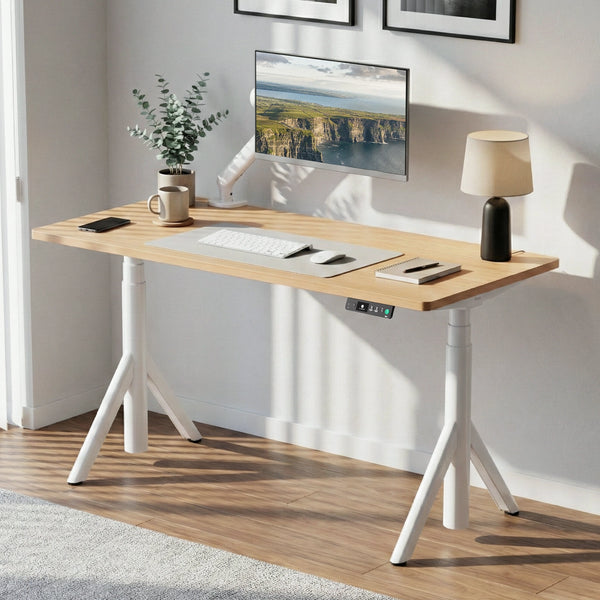
The 9amHome Robin Pro Standing Desk is a practical example of a melamine desktop paired with an adjustable dual-motor frame. Its easy-to-clean surface and fast-assembly design suit users who want a straightforward home-office setup rather than a desktop that requires ongoing finishing.
Source: Pinterest
4. Bamboo Desk Tops
Bamboo is a lightweight, eco-friendly material that's becoming more popular in modern furniture design. It has a natural texture and is sustainable as bamboo proliferates. While bamboo is softer than hardwoods, it offers a stylish and environmentally conscious option.

5. Metal and Glass Desk Tops
Glass desk tops create a sleek, modern look with a smooth surface that is easy to clean. However, glass is fragile and can shatter or crack, making it a less practical choice for high-traffic areas or homes with young children. Glass desks are a great fit for minimalist or contemporary spaces.

Best Desk Top Materials for Different Uses
Home Office
A home-office desktop should balance appearance, durability and everyday practicality. Solid wood can enhance the room and provide a long-lasting work surface, while plywood, MDF and MFC offer more affordable alternatives.
Solid wood is particularly suitable when the desk forms a visible part of a bedroom, living area or dedicated study. MFC may be more practical for a compact workstation where easy cleaning and predictable pricing are higher priorities.
For more help planning the complete workspace, see What Is the Best Standing Desk for a Home Office.

Standing Desks and Dual-Monitor Setups
A standing-desk desktop must be compatible with the lifting frame rather than selected on appearance alone. Check the recommended width, depth, thickness and total weight before installation. A heavy hardwood surface combined with monitors, monitor arms and other equipment must remain within the frame’s load capacity.
For a dual-monitor setup, also consider whether the material can support a clamp or mounting plate without local damage. If you prefer a complete frame-and-desktop system, compare the available standing desk options before sourcing the components separately.

Corporate and Shared Offices
In a corporate setting, durability and ease of maintenance are important. Particleboard or plywood desktops with a melamine finish are commonly used because they are relatively easy to clean and available in consistent sizes and finishes.
MFC is often practical for shared workstations, while plywood may suit offices that want a sturdier surface with a more distinctive edge or finish. Metal and glass can create a particular visual style but are less common where comfort, repairability and easy equipment installation are priorities.
Study Desks for Children
Safety, durability and easy cleaning are important when choosing a desktop for a child’s study area. Engineered wood options such as plywood or MFC can provide an affordable and practical surface for everyday use.
Look for rounded or protected edges, a durable finish and clearly stated emissions information. The complete desk should also be stable and appropriately sized for the child rather than selected solely on the basis of the desktop material.

How to Choose the Right Desktop Material
Rather than choosing by appearance alone, consider how the surface will respond to daily use.
Durability and Maintenance
Each material has different maintenance requirements. Metal and glass need care to avoid visible scratches, while plywood and MFC are generally straightforward to clean.
The maintenance required for solid wood depends on its finish. An oiled surface may need occasional reapplication, while a sealed surface may only require regular dusting and prompt cleaning of spills. MDF and MFC should be wiped with a lightly damp cloth rather than saturated with water, particularly around the edges.
Weight, Thickness and Frame Compatibility
Desktop weight matters when the surface will be installed on an adjustable frame. Include the weight of monitors, computers and accessories when checking the frame capacity.
Thickness also affects screw installation and the use of monitor arms. A very thin desktop may require reinforcement, while an unusually thick surface may not fit some clamps. Always check the frame and accessory specifications before drilling.
Material Sourcing and Indoor Emissions
When choosing a desktop material, consider its impact on the environment and indoor environment.
These factors should be assessed separately. An FSC label relates to the responsible sourcing of forest-based materials, while emissions information concerns substances released by composite wood, adhesives, finishes and the completed product. One certification should not be presented as proof of the other.
Conclusion
There is no one-size-fits-all material when it comes to desktops. Your decision should be based on your budget, where the desk will be used and your personal preferences.
Solid wood is a strong choice when natural appearance and long-term character matter most, while plywood offers a practical balance of strength, weight and cost. MDF and MFC suit users who want an affordable and easy-to-maintain surface. Before deciding, also check the desktop’s thickness, finish, total weight and compatibility with the desk frame and monitor equipment.
The other articles you might interested:
What is the Best Standing Desk for a Home Office
Can An Adjustable Standing Desk Help With Weight Loss
Frequently Asked Questions
What is the most durable desktop material?
A well-made hardwood desktop can provide excellent long-term durability, but its performance depends on the wood species, construction and finish. Quality plywood can also be a durable option with less natural movement.
Is MDF or plywood better for a desk?
Plywood is generally preferable when strength, screw holding and structural stability are priorities. MDF provides a smoother surface and may cost less, making it suitable for painted or lightly used desktops.
What is the best desktop material for a standing desk?
Solid wood, plywood and MFC can all work well when their size and weight are compatible with the frame. The best choice depends on whether you prioritise appearance, overall weight, maintenance or price.
How thick should a standing desk top be?
There is no universal thickness because frame and mounting requirements vary. The desktop must be thick enough to hold its screws and equipment safely without exceeding the frame manufacturer’s specifications.
Which desktop material is easiest to maintain?
MFC is one of the easiest materials to maintain for everyday office use because its melamine surface can usually be wiped clean. Damaged edges should still be protected from moisture.

Leave a comment