Pesk Melamine Smart Standing Desk
Dual Motors Powered By Bosch
$889.00
$929.00
Eco-Friendly Desk
Dual Motors Powered By Bosch
$889.00
$929.00

Ultra Stable & 5-Min Fast Assembly
$819.00
$899.00

Compact & Space-Saving Design
$829.00
$859.00

Easy Setup & Budget Choice
$699.00
$759.00

All-in-one ergonomic setup
$1,459.90
$1,589.90

Complete Ergonomic Hardwood Setup
$1,439.90
$1,589.90

Pesk Standing Desk & Galileo Bundles
$1,488.00
$1,528.00

Setup For Compact Home Offices.
$1,308.00

Premium SIt-Stand Desk and Chair Setup
$1,997.00
$2,147.00

Adjustable monitor arm with cable control
$179.00

360° caster wheels with smooth rolling and secure brakes
$49.90

Keep cables organised and your workspace clean
46.90

Raise your screen for better posture and extra storage
$129.00

Easy-access power with USB-C, USB-A and 3 outlets.
169.00

Soft, durable desk protection with reversible colour options
69.00

Ergonomic monitor height with extra storage underneath.
159.00




Eco-friendly Desk
Dual Motors Powered By Bosch
$889.00
$929.00
Ultra Stable & 5-Min Fast Assembly
$819.00
$899.00
Compact & Space-Saving Design
$829.00
$859.00
Easy Setup & Budget Choice
$699.00
$759.00
Solidwood Desk
Standing Desks
Standing Desks
All-in-one ergonomic setup
$1,459.90
$1,589.90
Complete Ergonomic Hardwood Setup
$1,439.90
$1,589.90
Pesk Standing Desk & Galileo Bundles
$1,488.00
$1,528.00
Setup For Compact Home Offices.
$1,308.00
Premium SIt-Stand Desk and Chair Setup
$1,997.00
$2,147.00
Catalog
Adjustable monitor arm with cable control
$179.00
360° caster wheels with smooth rolling and secure brakes
$49.90
Keep cables organised and your workspace clean
46.90
Raise your screen for better posture and extra storage
$129.00
Easy-access power with USB-C, USB-A and 3 outlets.
169.00
Soft, durable desk protection with reversible colour options
69.00
Ergonomic monitor height with extra storage underneath.
159.00
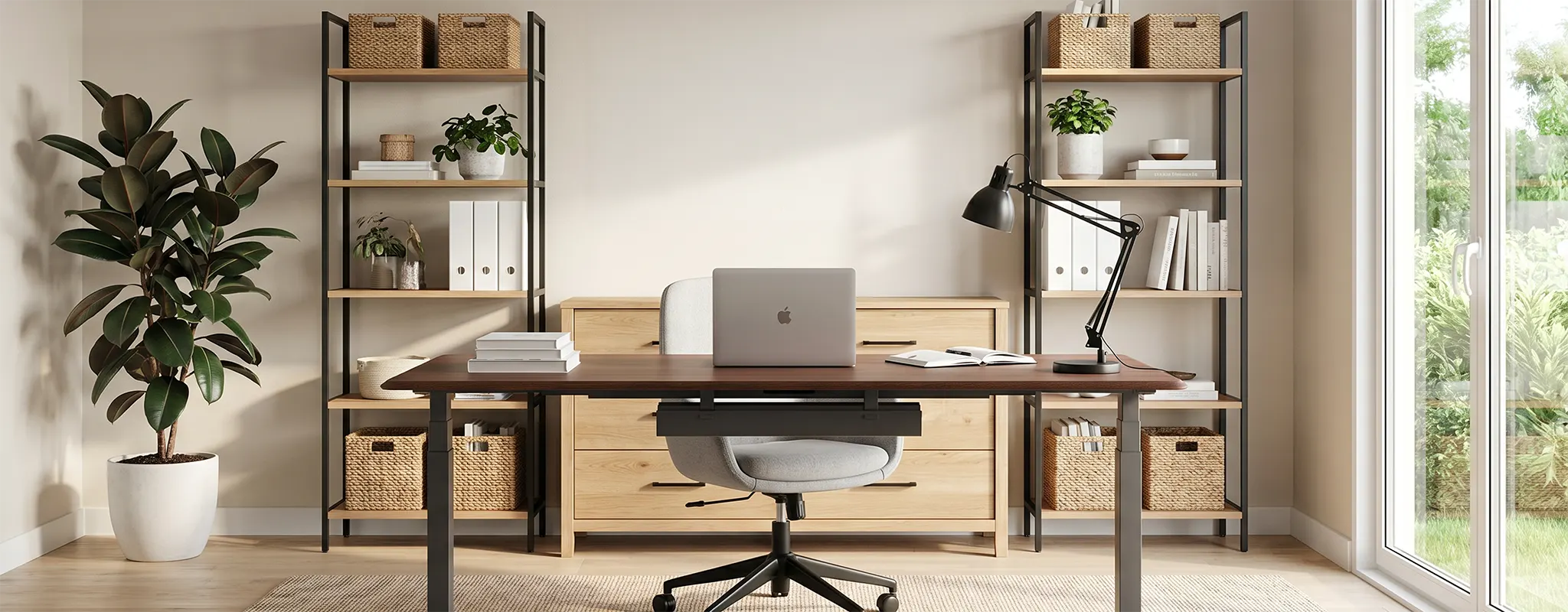
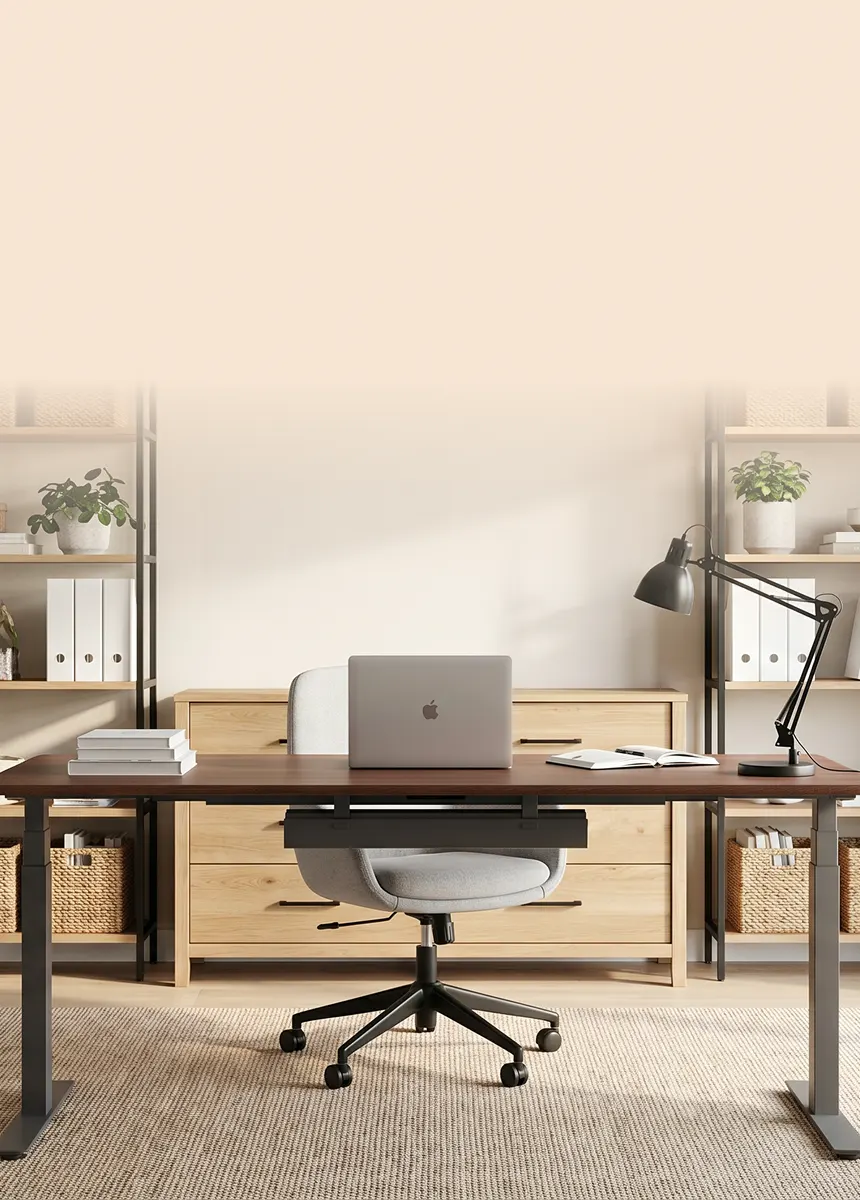
From hours of deep focus to the moment you log off, designed to elevate your work and fade into your home.

“It should make you work better.”
A proper workspace gives you more than functionality—it gives you unshakeable confidence throughout the day.
• Presence
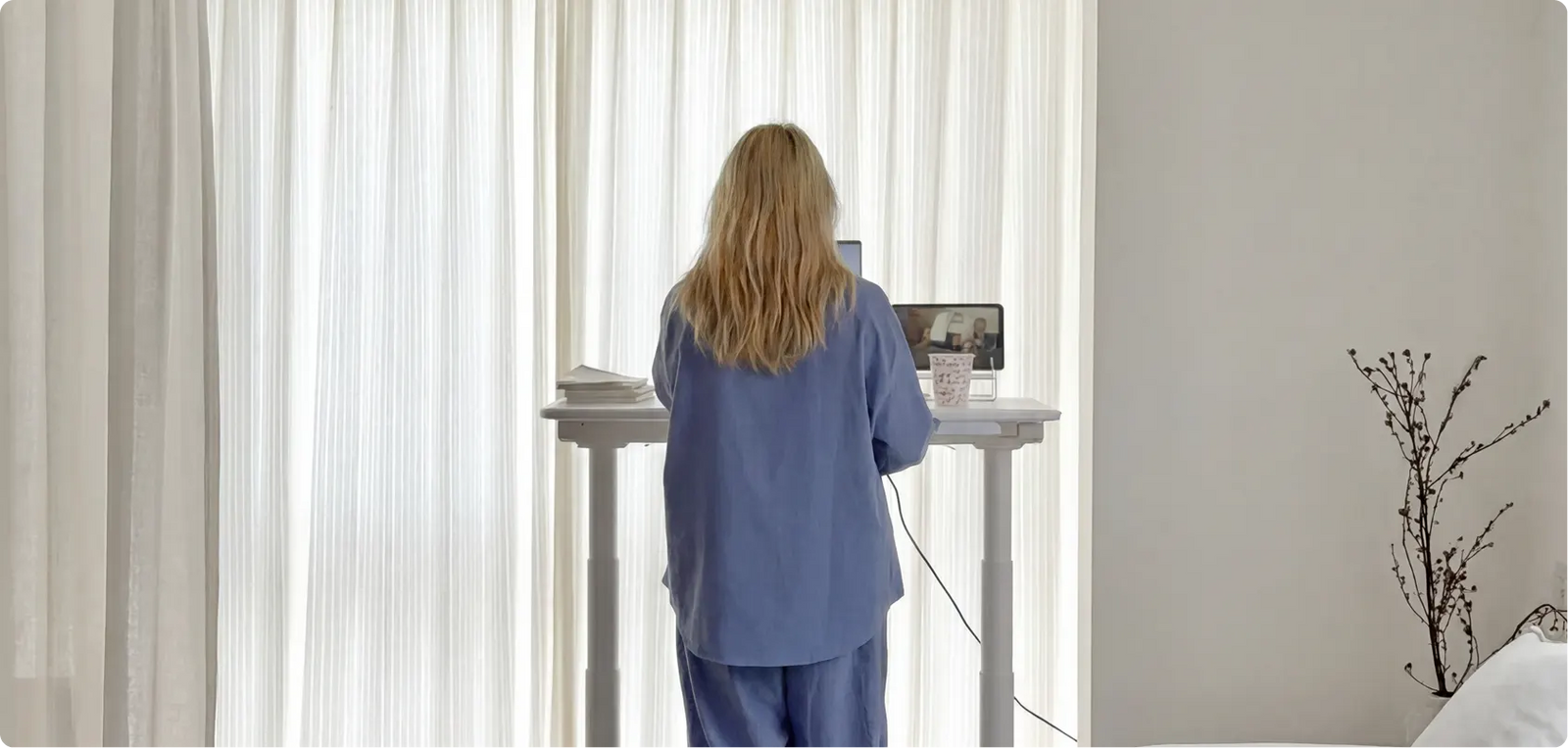
A camera-level view and clear backdrop keep you poised in every video call.
• Stability
A rock-solid structure where the desktop stays perfectly still, even during intense typing.
• Clarity
Cables and power hubs vanish entirely, leaving only what you need to focus.

“It should belong in your home.”
Most WFH setups feel like an intrusion—either bringing corporate coldness home, or forcing a makeshift corner on your dining table.
• Harmony
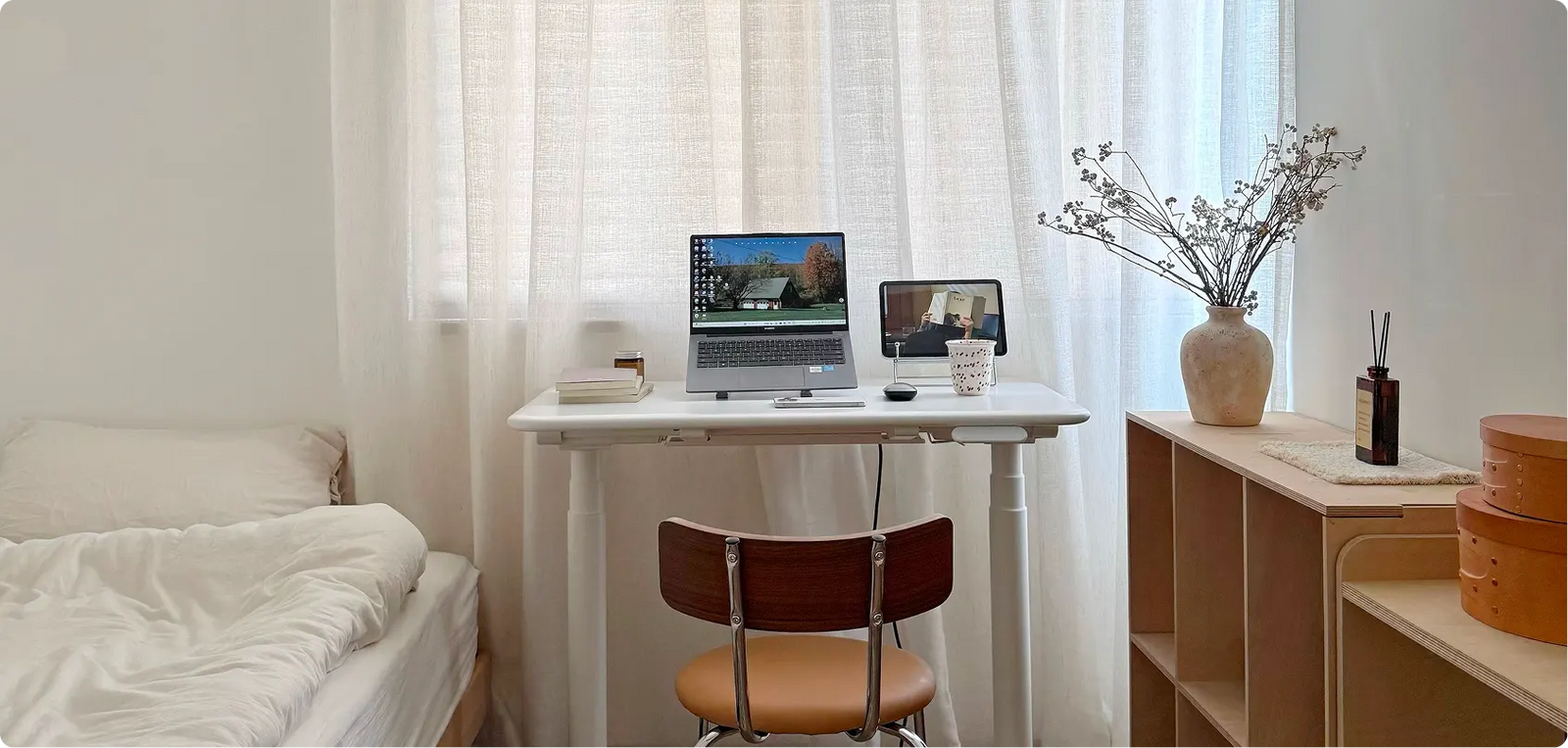
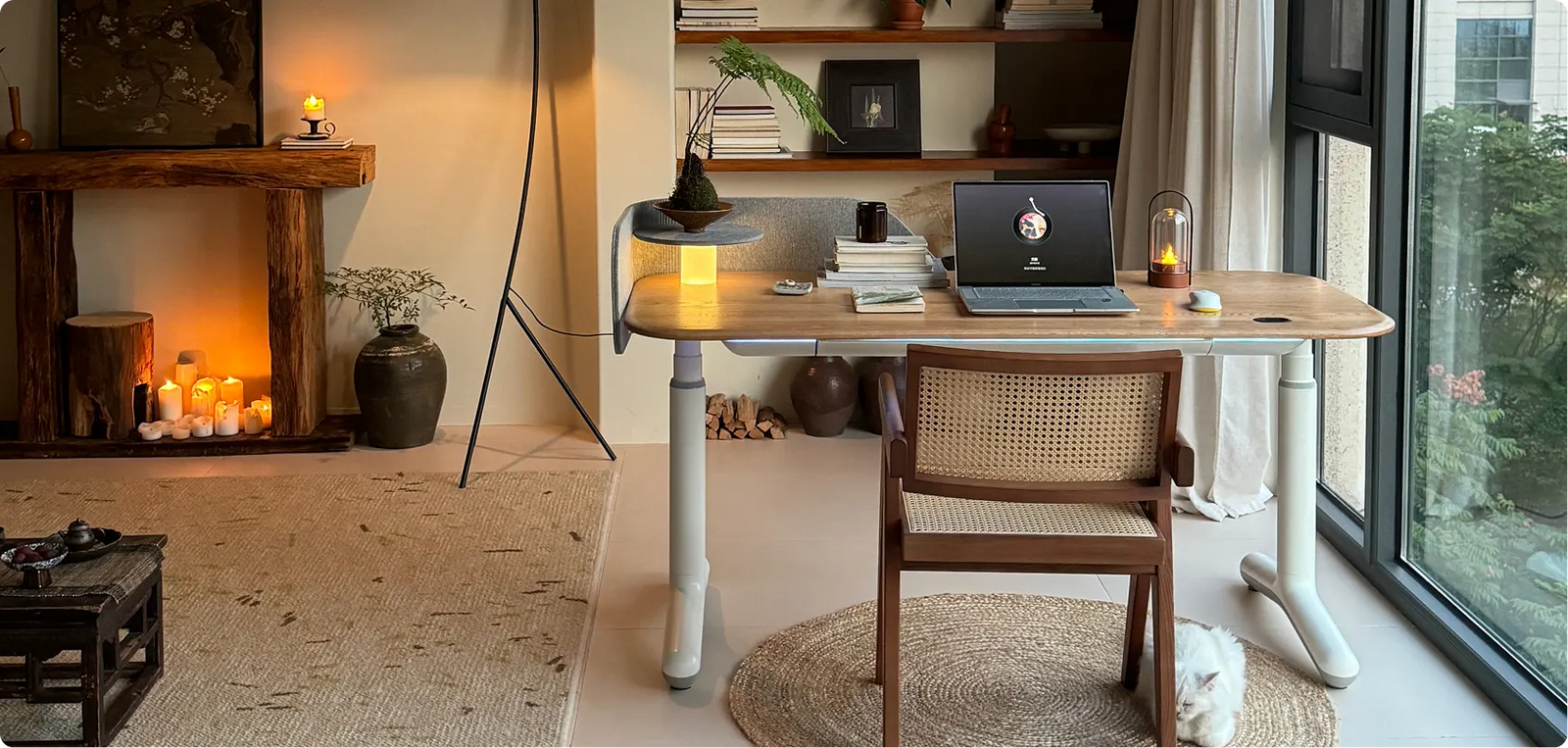
Natural wood textures that converse warmly and blend effortlessly with your decor.
• Proportion
A restrained footprint tailored for modern living, never overwhelming your personal space.
• Retreat
An unspoken rule that when the workday ends, it gracefully fades into the background.

“It holds your body and mind.”
A sustainable workspace is built around the human being, not around how much equipment it can hold.
• Alignment
Ergonomic balance that respects your spine, neck, and elbows, releasing physical tension.
• Rhythm
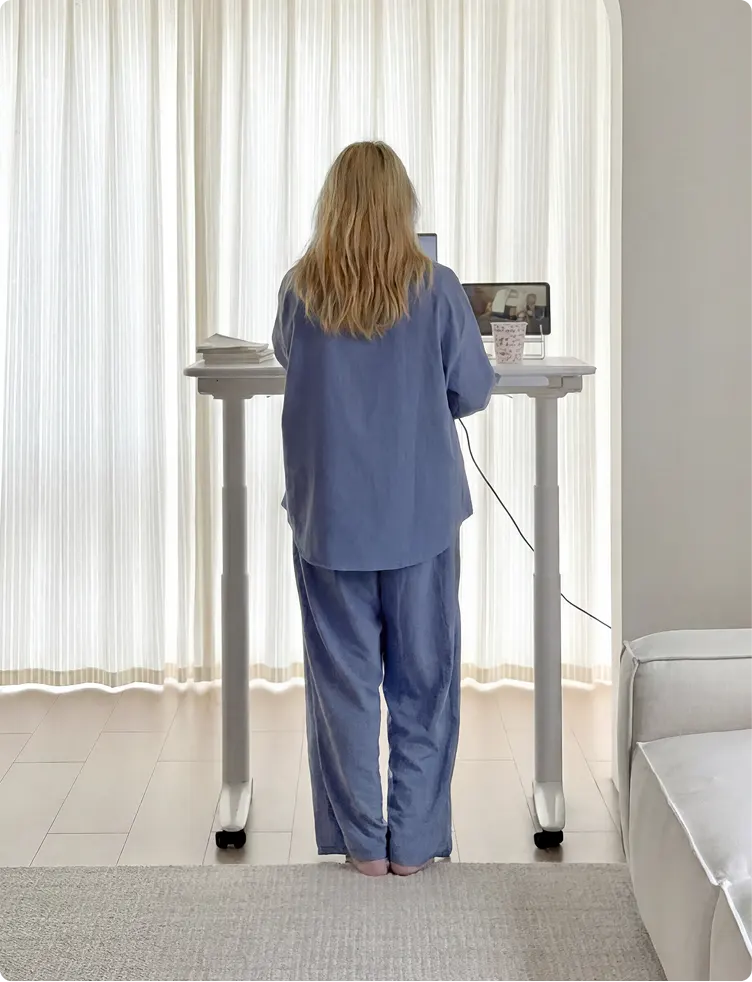
Seamlessly adapting to your shifting energy levels, allowing your body to stand, sit, and breathe.
• Longevity
Premium, enduring materials that support your health and your career for years to come.
Science suggests a fluid 50:10 rhythm—50 minutes of seated, high-density focus, followed by 10 minutes of standing or moving.
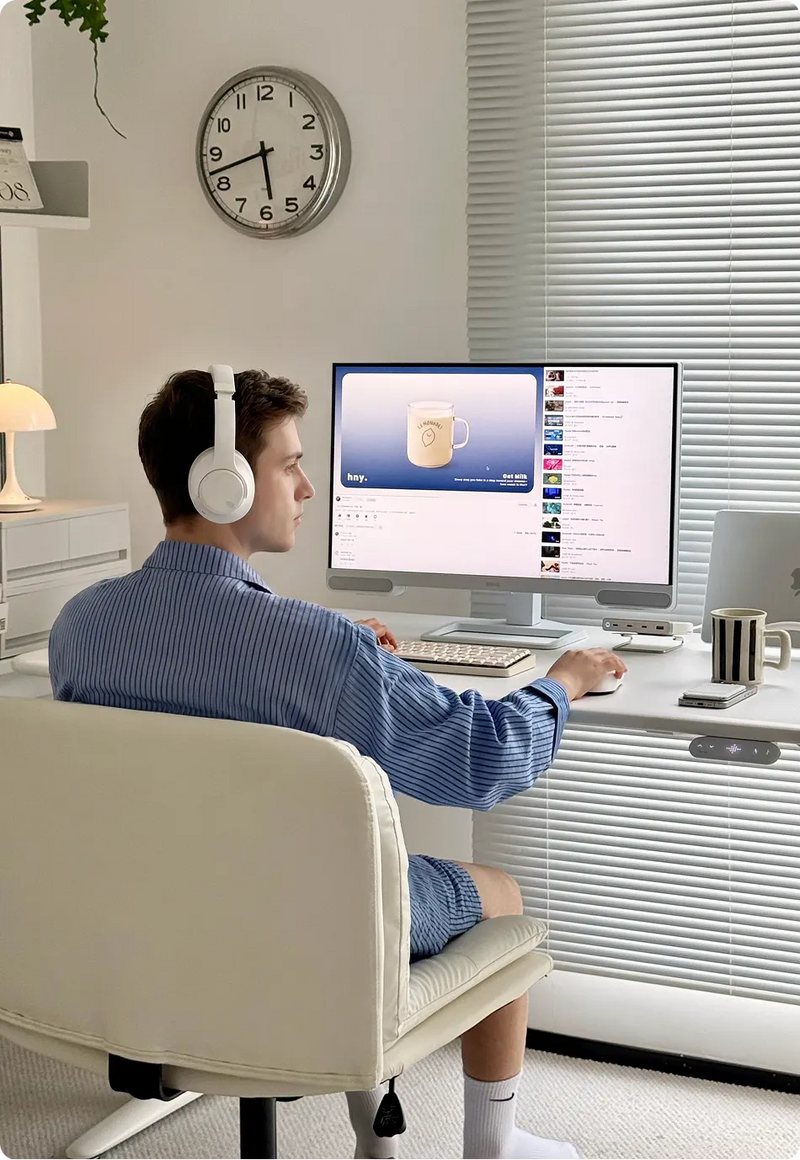
Position your monitor so the top third of the screen sits exactly at eye level, roughly an arm's length away. This creates a natural 10° to 20° downward viewing angle
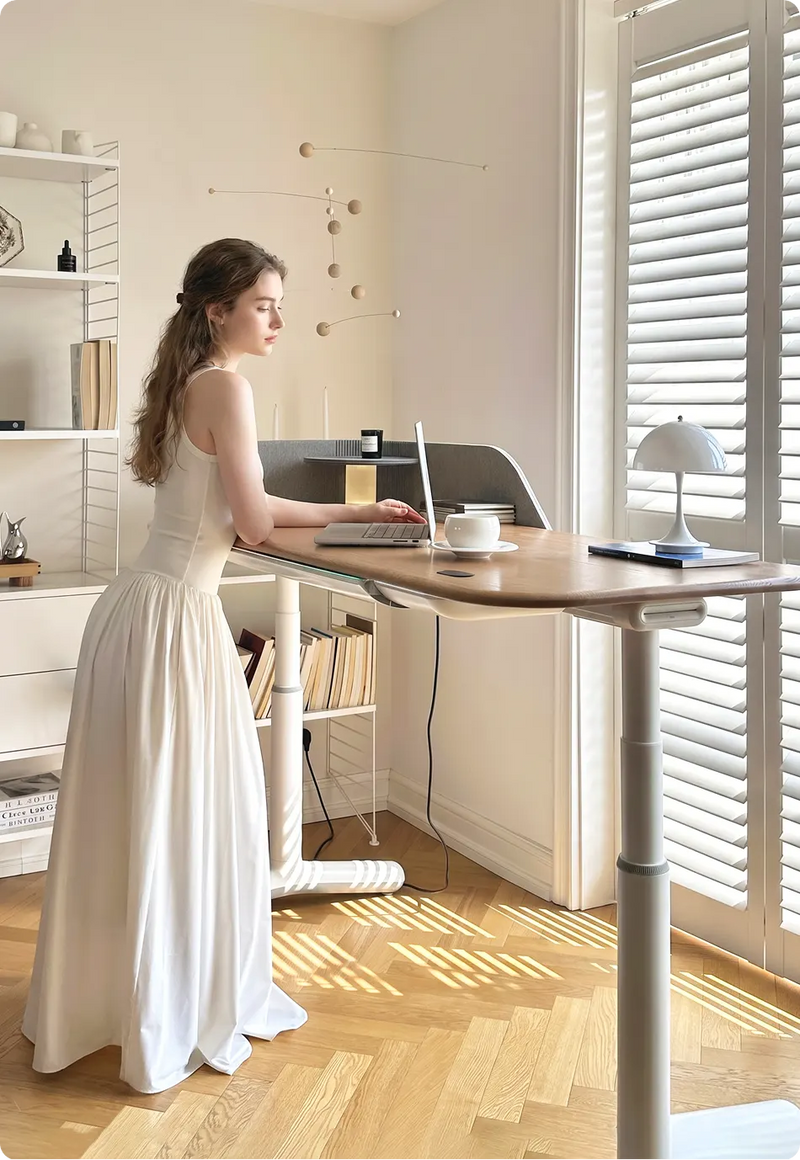
Adjust your desk height until your forearms rest parallel to the floor, forming a 90° to 100° angle at the elbow. Your wrists should remain neutral.
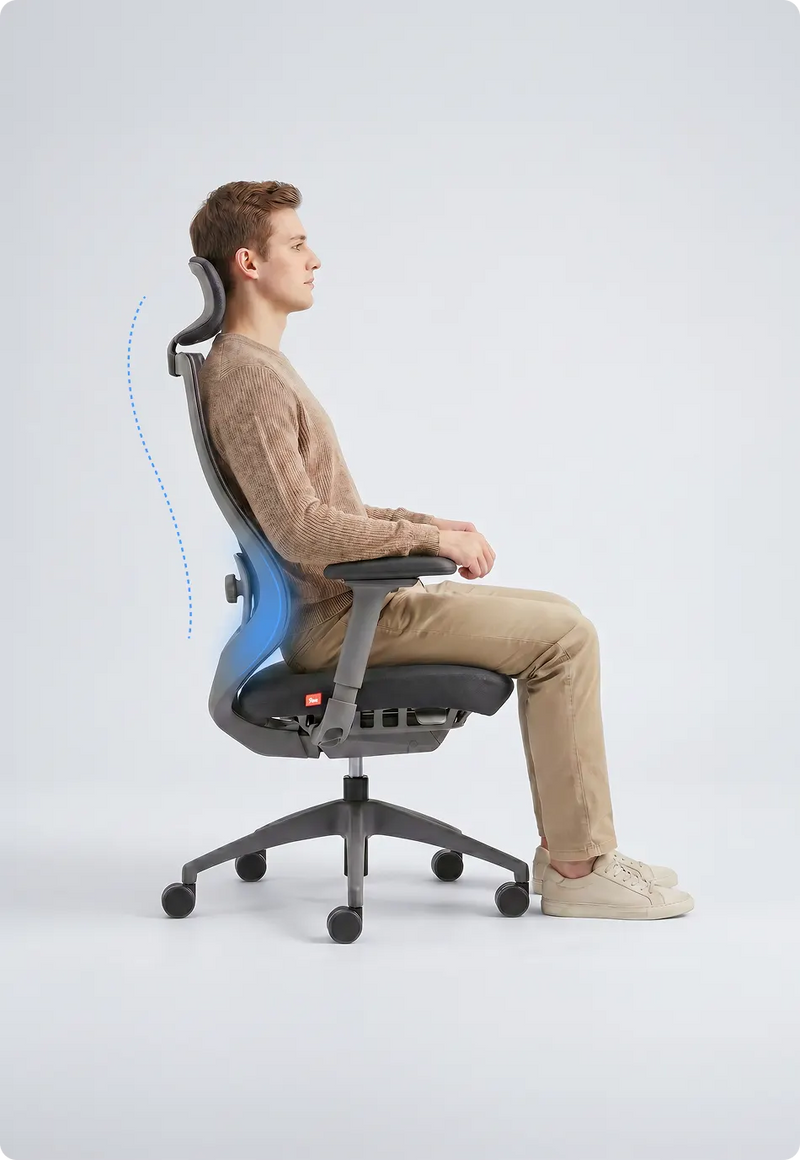
The lumbar support must align precisely with the natural curve of your lower back. Keep your pelvis tilted slightly forward and your feet flat on the floor to evenly distribute spinal pressure.
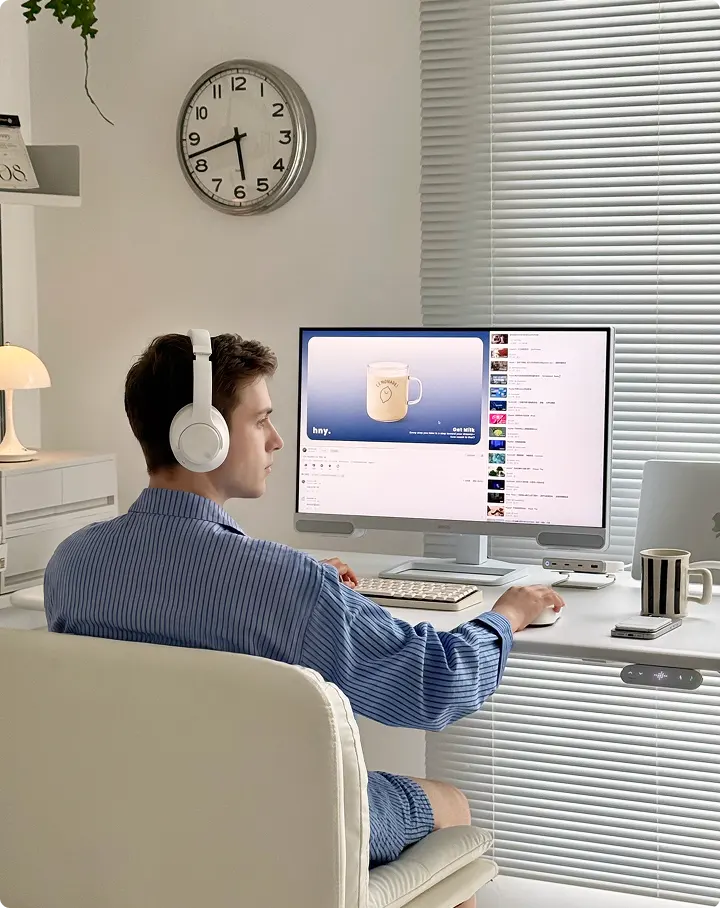
Position your monitor so the top third of the screen sits exactly at eye level, roughly an arm's length away. This creates a natural 10° to 20° downward viewing angle
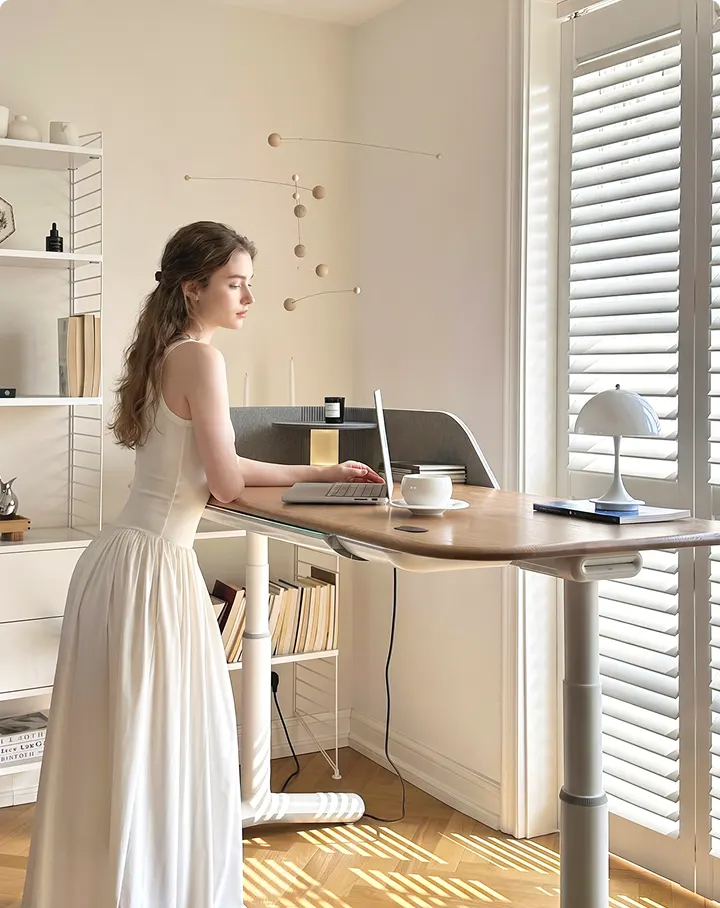
Adjust your desk height until your forearms rest parallel to the floor, forming a 90° to 100° angle at the elbow. Your wrists should remain neutral.
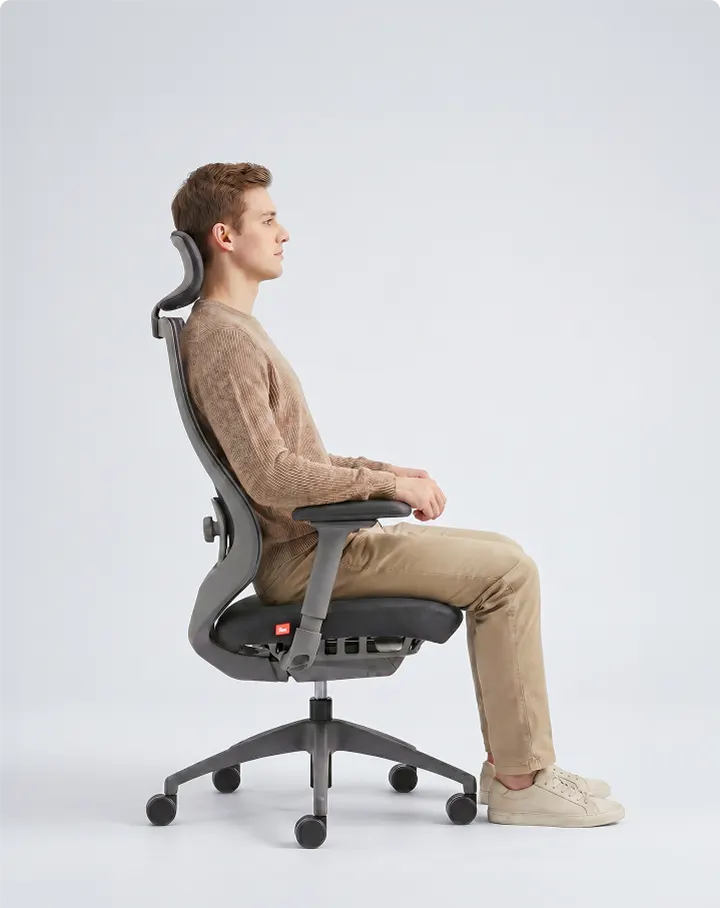
The lumbar support must align precisely with the natural curve of your lower back. Keep your pelvis tilted slightly forward and your feet flat on the floor to evenly distribute spinal pressure.