






How to Organise Desk Drawers for a Clutter-Free Home Office
A cluttered desk drawer can make even simple tasks slower when pens, cables, documents, and small office supplies are difficult to find. Good desk drawer organisation is not about fitting in as much as possible, but giving useful items a clear place based on how often and where you use them. This guide explains how to organise desk drawers for a cleaner home office, from sorting and zoning items to arranging storage around your daily workflow and keeping it organised over time.
This guide explains how to organise desk drawers for a cleaner home office, from sorting and zoning items to arranging storage around your daily workflow and keeping it organised over time.
Clear Out and Sort Your Desk Drawers
Before deciding where everything should go, first reduce what is in the drawer and group what remains. This gives you a clearer idea of what actually needs storage and makes the next steps easier.
Empty the Drawer Completely
Remove everything from the drawer and place it on a clear surface. With the drawer empty, you can see how much usable space is available, spot items that may no longer be worth keeping, and wipe away any dust or debris before reorganising.
Remove Unnecessary or Duplicate Items
Discard dried-out pens, outdated papers, empty packaging, and items you no longer use. Keep only useful duplicates, and move bulk backup supplies elsewhere if they do not need to stay within immediate reach.
Sort What Remains Into Practical Categories
Group the remaining items by function so each type of office supply has a clear place. Practical categories may include:
- Writing tools: pens, pencils, markers, and highlighters
- Paper supplies: sticky notes, labels, and notepads
- Tech accessories: USB drives, card readers, and small charging accessories
- Documents: active paperwork, receipts, and reference materials
- Personal items: glasses, keys, and other small everyday essentials
Items that are often used together should stay in the same category, making the drawer easier to organise and maintain.
Arrange Items by Use and Frequency
Once items are sorted, organise them according to how often you reach for them. The most frequently used supplies should require the least effort to access.
Keep Everyday Essentials Within Easy Reach
If you reach for the same pen or notebook several times during a workday, it should not be buried behind spare supplies. Everyday essentials such as pens, sticky notes, a notebook, or one charging cable you use regularly are better kept near the front of the drawer, where they are easy to take out and return after use.
Place Occasionally Used Items Further Back
Not everything in a desk drawer needs to occupy the easiest spot to reach. A stapler used once a week, spare cables, labels, or specialised stationery can sit towards the back, keeping the front of the drawer available for items you use every day.
Store Backup Supplies in Lower or Less Accessible Areas
Backup supplies rarely need prime drawer space. If you only replace a notebook every few weeks or refill printer supplies occasionally, lower drawers and less accessible sections are usually enough, leaving the most convenient storage areas free for daily-use items. For heavier supplies, accessibility also matters: Comcare’s office storage guidance recommends positioning heavier items where they can be accessed without unnecessary reaching or awkward handling.
Use Drawer Organisers to Create Clear Zones
Once you know what belongs in each drawer, organisers can help keep those categories from mixing together again. The goal is to create clear zones that match the size and type of items you store.

Measure the Drawer Before Choosing Organisers
Measure the available space before buying trays, boxes, or dividers. If you are choosing a new desk rather than organising an existing one, comparing home office desks with drawers can also help you consider the drawer size and placement before deciding what will fit inside. For an existing drawer, check the:
- internal width
- internal depth
- internal height
- clearance around drawer runners or other fittings
An organiser that fits poorly can waste usable space, prevent the drawer from closing properly, or leave awkward gaps that quickly collect clutter. When choosing desk accessories for organisation, match them to the available space: dividers work well for mixed small items, shallow trays suit low-profile drawers, while stackable organisers are more useful when a deeper drawer provides enough vertical clearance.
Use Dividers for Small Everyday Items
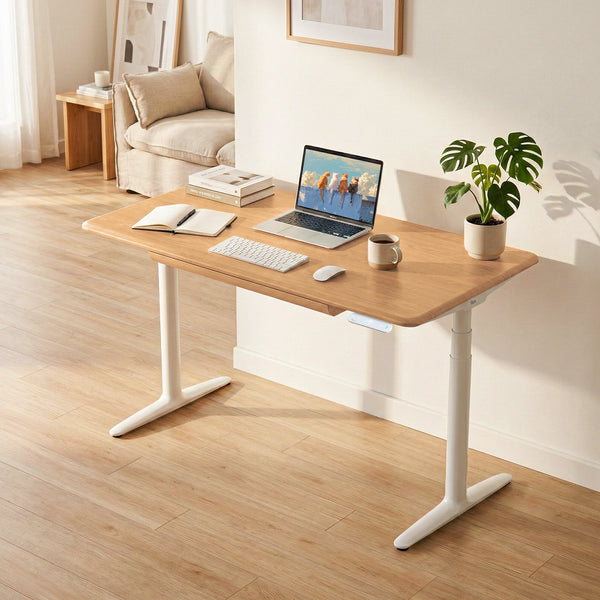
Small items rarely stay neatly grouped in an open drawer for long. After a few days of taking out pens, sticky notes, or USB drives, they can easily slide into the same corner and become mixed together. When configured with the optional drawer, the 9am HOME Atom Pro Ash Hardwood Home Office Stand Up Desk provides removable dividers that create separate sections for different items, helping frequently used supplies stay in a fixed place while reducing the need for an additional freestanding storage cabinet.
Keep Cables and Electronics in Separate Sections
Spare charging cables, USB adaptors, and other small electronics are easier to find when they have their own drawer section instead of being mixed with stationery. Meanwhile, cables already in use at your workstation need a different solution. For example, a laptop charger and monitor cable may run to the same power board under the desk throughout the day. The 9am HOME under desk cable management tray keeps the power board, adaptors, and excess cable length managed below the desktop while your devices remain connected, leaving the drawer for spare accessories and other items that actually need to be stored.
Organise Drawers Around Your Daily Workflow
A well-organised drawer should reflect how you actually work during the day. Whether it is built into an office desk for home office use or added separately, arrange the storage around your regular tasks so the items you use together are easy to reach when you need them.

Match Drawer Zones to Your Main Work Activities
Instead of dividing a drawer only by item type, think about what you usually do at your desk. If you often take notes during video calls, for example, keeping a notebook, pen, and sticky notes together means you do not have to search for them when a meeting starts. If you regularly deal with bills or other paperwork, active documents, a pen, and frequently used labels can share another section. Someone who transfers photos or files between devices may find it more practical to keep USB drives, memory cards, and a card reader together. Organising around these everyday routines makes it easier to reach everything needed for a task without letting unrelated supplies gradually mix together.
Keep the Desktop Clear for Active Work
A well-organised home office desk should keep the space you use for active work clear rather than turning every open area into storage. One practical way to do this is to divide the desktop into three zones based on how easily you can reach each area:
- Immediate reach: keep the keyboard, mouse, and other high-frequency essentials here.
- Arm’s reach: use this area for secondary items such as a water bottle, coffee, or tissues.
- Further away: reserve this space for lower-frequency items that do not need to stay immediately accessible.
This arrangement keeps everyday essentials easier to access without allowing everything to accumulate directly in front of you. The same principle applies below the desktop, where good standing desk cable management can keep connected cables and power equipment from spreading across the active workspace.
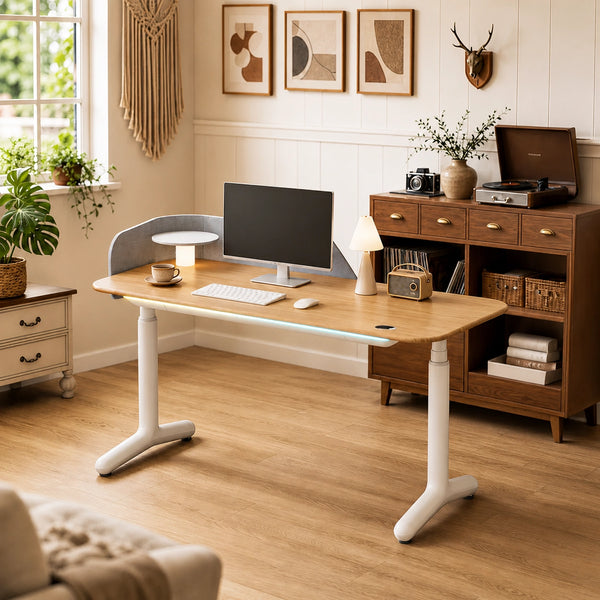
Chargers, power boards, and cables can still take up considerable space. The 9am HOME Dora Pro Hardwood Smart Electric Standing Desk helps move these items away from the active desktop area: its concealed under-desk drawer can hold stationery, notes, and frequently used accessories, while the fold-away hidden cable management area can accommodate larger power boards and adaptors, making the three desktop zones easier to keep clear.
Tips for Keeping Your Desk Drawers Organised
Once each drawer has a clear purpose, a few simple habits can stop clutter from building up again.
Return Items to Their Assigned Zones
Put items back in their designated sections after use instead of leaving them on the desktop or dropping them into the nearest drawer. Consistent placement makes supplies easier to find and helps each storage zone keep its purpose.
Avoid Overfilling Drawers
A drawer is probably too full if you have to move several items just to reach one pen or charging cable. Leaving some unused space makes it easier to take things out and return them without disturbing the rest of the drawer, which also helps prevent categories from mixing together again.
Review and Remove Unused Items Regularly
Check drawers every few months for dried-out or unused supplies, outdated paperwork, empty packaging, or items that are no longer part of your routine. Removing them early prevents unused items from gradually taking over useful storage space.
Do a Quick Weekly Reset
Friday afternoon or the end of your last workday is a practical time for a quick reset. A few minutes spent returning misplaced items, clearing loose papers, and checking each drawer is usually enough to stop small amounts of clutter from turning into a full reorganisation later.
Conclusion
Organising desk drawers is easier to maintain when each item has a clear place based on its purpose and how often you use it. Clear out what you do not need, create practical zones for the items that remain, and keep everyday essentials easy to reach without overcrowding the drawer. A simple weekly reset and occasional review can prevent clutter from building up again, helping your home office stay organised and easier to work in over time.
FAQ
How Do You Organise a Deep Desk Drawer?
Use vertical space carefully and keep frequently used items near the top or front. Stackable trays, shallow containers, or dividers can help prevent small supplies from disappearing underneath larger items.
Should You Use a Liner in a Desk Drawer?
Yes, if you want to protect the drawer surface or reduce slipping. Choose a thin, non-slip liner that can be removed for cleaning and does not interfere with drawer organisers or closing clearance.
How Should You Store A4 Documents in a Desk Drawer?
Store A4 documents flat in a drawer that is wide and deep enough to prevent bending. Use labelled folders or document trays to separate active paperwork from records you only need occasionally.
Can Desk Drawers Reduce Legroom?
They can, but it depends on the drawer’s size and placement. A deep or bulky drawer mounted beneath the centre of the desktop may reduce knee or thigh clearance, while a slim, well-positioned drawer can provide storage without noticeably interfering with the space below. Before choosing a desk with built-in or under-desk storage, check the drawer dimensions and available legroom in your normal seated position.
What Should You Keep in a Home Office Desk Drawer?
Keep items you use regularly but do not need on the desktop, such as pens, sticky notes, notebooks, USB drives, charging accessories, and active paperwork. Less frequently used supplies and bulky backup items are better stored elsewhere so the drawer remains easy to access and does not become overcrowded.
How Much Weight Can You Put in a Desk Drawer?
Follow the manufacturer’s stated drawer load limit rather than relying on a general rule. Weight capacity varies by drawer construction, runners, mounting method, and desk design, so heavier items should only be stored where the drawer is designed to support them.

Leave a comment