






Can Standing Burn Calories? Standing vs Sitting at a Desk
Can standing burn calories, and does it make a meaningful difference during the workday? Standing does burn more calories than sitting, although the difference is usually small. For people using standing desks in Australian workplaces or home offices, even replacing some sitting time with standing may slightly increase daily calorie burn.
This guide compares standing vs sitting calorie burn, looks at how standing affects muscle activity and glucose metabolism, and shares practical ways to burn more calories while working.
Can Standing Burn Calories?
Yes. Standing burns slightly more calories than sitting because it requires more muscle activity to maintain balance. However, the difference is small, so standing is best viewed as a way to reduce prolonged sitting rather than a major calorie-burning strategy.
Why Standing Uses More Energy Than Sitting
When you sit, the chair supports much of your body weight. Standing requires the muscles in your legs, hips and core to stay active to maintain posture and balance.
Small movements such as shifting your weight or adjusting your stance also add to energy use. This is why standing at a desk burns more calories than sitting, even though both are still low-intensity activities.
Why the Calorie Difference Is Relatively Small
Standing increases muscle activity, but not nearly as much as walking or exercise. Heart rate and oxygen demand therefore rise only slightly compared with sitting.
As a result, the extra calories burned while standing are modest. The greater benefit comes from breaking up long periods of sitting and creating more opportunities to move during the workday.
Standing vs Sitting: Which Burns More Calories?
Standing burns more calories than sitting, but the difference is modest. For a broader comparison beyond calorie burn, our standing desk vs sitting desk guide covers ergonomics and everyday use, while this section focuses on energy expenditure, muscle activity and glucose metabolism.

Sitting Calorie Burn as a Baseline
Sitting still burns calories because your body continues to use energy for breathing, circulation and other basic functions. However, desk-based sitting involves little physical activity, so energy expenditure stays relatively low.
The exact number of calories burned while sitting varies with body weight, age, sex and metabolism. For this reason, sitting provides a useful baseline when comparing calories burned sitting vs standing.
Standing Calorie Burn During Desk Work
Standing at a desk raises energy expenditure slightly above sitting, but the actual amount varies with standing time and how active you are during that period. Quiet standing sits at the lower end, while standing periods that include brief movement can increase energy use further.
In practice, standing desk calorie burn depends on how standing fits into the rest of the workday. The effect becomes more meaningful when standing replaces some sitting and creates opportunities for regular movement rather than simply becoming another static posture.
Beyond Calories: Standing, Muscle Activity and Blood Sugar
The value of standing goes beyond burning a few extra calories. It can break up prolonged sitting and increase low-level activity in the postural and lower-body muscles, keeping more muscle tissue active during the workday.
Muscle contractions can stimulate glucose uptake through pathways that are partly independent of insulin, which helps explain why activating large lower-body muscles can support glucose metabolism. However, quiet standing has a limited and less consistent effect on post-meal glucose than light walking.
How Much More Does Standing Burn?
A systematic review of sitting versus standing involving 46 studies and 1,184 participants found that standing used about 0.15 more calories per minute than sitting on average, equal to roughly 9 extra calories per hour.
The difference becomes clearer when sitting, standing and light walking are compared in a typical desk-work setting.
|
Work Style |
Relative Calorie Use |
Muscle Activity |
Movement Level |
Suitable Work Tasks |
|
Sitting |
Lowest |
Low |
Minimal |
Detailed work, typing and longer focus periods |
|
Standing |
Slightly higher than sitting |
More postural and lower-body muscle activity |
Low |
Calls, meetings and routine desk tasks |
|
Light walking |
Higher than standing |
Greater lower-body muscle activity |
Light |
Emails, reading and less demanding meetings |
Standing therefore provides only a modest increase in calorie burn compared with sitting. Light walking requires more muscle activity and energy, which is why adding short periods of movement can make a greater difference than simply standing still for longer.
How Standing at Work Can Increase Daily Calorie Burn
The small calorie difference between sitting and standing becomes more relevant when position changes are repeated throughout the workday. An electric standing desk can make it easier to replace some sitting time with standing and add light movement throughout the day.

Replacing Some Sitting Time With Standing
You do not need to stand for hours at a time. Short standing periods during calls, meetings or routine tasks can gradually reduce total sitting time and slightly increase daily energy use. Our guide on how long you should stand at a standing desk explains how to build standing time gradually into the workday.
Alternating between sitting and standing is also easier to maintain than staying upright for long periods. Regular position changes can help reduce fatigue and make standing a more realistic part of the workday.
Adding Movement While You Stand
Standing is more effective when it encourages movement. Shifting your weight, changing position or walking briefly between tasks uses more energy than remaining completely still.
These small movements contribute to NEAT, the energy you use through everyday activity outside planned exercise. For a more structured way to add low-intensity movement, a walking pad and standing desk setup can fit tasks such as emails, reading or less demanding meetings.
Tips for Burning More Calories While Working
Small changes in when you stand, walk and switch tasks can help increase daily energy use without disrupting your normal workflow.
Increase Standing Time at Work
For people who often sit for hours once work gets busy, the real challenge is turning “remember to stand” into a consistent habit. The 9am Home Dora Pro Smart Electric Standing Desk includes a sedentary reminder that prompts you to change position after prolonged sitting, while electric height adjustment makes it easy to switch quickly to standing height.
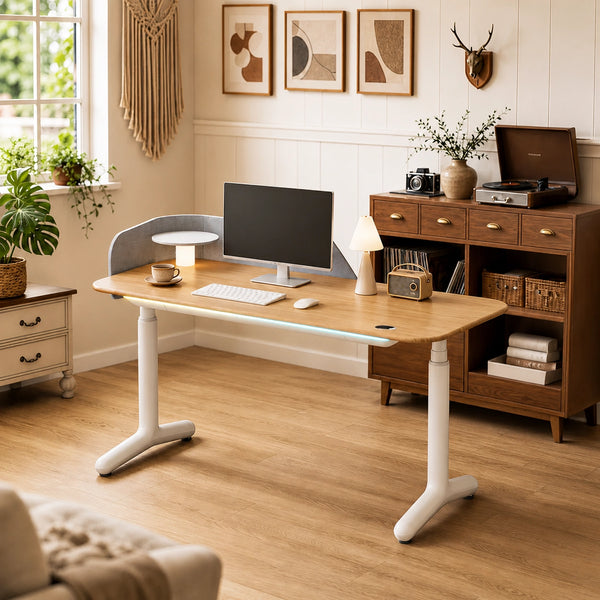
This makes it easier to add several short standing periods throughout the day instead of relying on one long standing session, which is more practical for people trying to reduce sitting time and build a consistent sit-stand routine.
Stand or Walk After Meals
Standing or taking a short walk after a meal can interrupt prolonged sitting and engage the large muscles in the legs and hips. These muscle contractions support glucose uptake, while a review of standing and light walking breaks found a clearer improvement in post-meal glucose with light walking than with standing alone.
Simple post lunch activities can make this easier to put into practice:
-
Stand while answering emails or taking a phone call.
-
Walk for a few minutes before returning to seated work.
-
Add light movement instead of remaining completely still at your desk.
These small changes add activity at a time when many people would otherwise stay seated. Light walking breaks may also help reduce fatigue and support alertness during prolonged desk work.
Add Walking While You Work
When using a walking pad, the desk needs to reach a comfortable height and remain stable while you walk and type. The 9am Home Pesk Dual Standing Desk uses a Bosch dual motor lifting system designed for smooth height adjustment and stable support, which can help create a steadier setup when pairing the desk with a walking pad for tasks such as emails, reading or meetings.
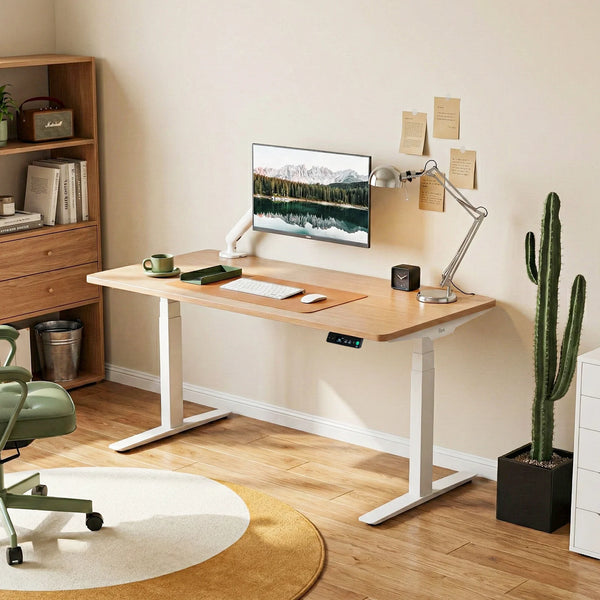
Walking while working is best suited to tasks that do not require precise mouse control or intense concentration. Even short periods at a walking desk setup can add more movement and calorie expenditure than standing still for the same amount of time.
Common Mistakes to Avoid When Standing at Work
Height-adjustable standing desks work best when the workstation is set up correctly and supports regular position changes throughout the day. Poor desk height, prolonged standing and too little movement can all reduce their practical benefits.
Using the Wrong Desk Height
Setting the desk to standing height is only the first step. If the monitor remains too low or too far away, you may still tilt your head down or lean forward while working.
A 9am Home Flexible Adjustment Single Monitor Arm lets you readjust screen height, distance and angle when switching between sitting and standing, helping the whole workstation adapt more easily to each position.
Standing for Too Long Without Changing Position
Standing in the same position for long periods can contribute to discomfort in the legs and lower back. Rather than staying upright for hours, alternate between sitting, standing and light movement so you do not simply replace prolonged sitting with prolonged standing.
Relying on Standing Instead of Moving
A common mistake is treating standing time as a replacement for movement or exercise. Use standing to break up sedentary time, then add short walks or other light activity where possible so the workday does not simply shift from prolonged sitting to prolonged standing.
Conclusion
So, can standing burn calories? Yes, but only slightly more than sitting. Its greater value comes from breaking up prolonged sitting, increasing low level muscle activity and making it easier to add more movement throughout the workday.
For the best results, alternate between sitting and standing, take short walking breaks and avoid staying in one position for too long. Standing should support a more active routine rather than replace regular exercise.
FAQ
Does Body Weight Affect Calories Burned While Standing?
Yes. Body weight can influence total calories burned while standing, but it does not determine the standing versus sitting difference on its own. Age, sex, body composition, metabolism and how much you move while standing can also affect the result.
How Accurate Are Standing Calorie Calculators?
Standing calorie calculators are useful for estimates, but they are not exact. Most calculate energy expenditure from factors such as body weight, activity level and duration, while individual metabolism and small movements such as shifting weight can change the actual number of calories burned.
Does Standing After Lunch Burn More Calories Than Sitting?
Yes. Standing after lunch uses slightly more energy than remaining seated, although the calorie difference is still small. Adding a short walk is more effective if you want to increase energy expenditure and can also provide greater benefits for post meal glucose response than standing still.
Does Standing at Work Count Towards Australian Physical Activity Recommendations?
Standing can help reduce time spent sitting, but quiet standing should not be treated as a substitute for the physical activity recommended in Australia’s 24-hour movement guidelines. The Australian Government’s adult physical activity recommendations advise limiting sedentary time and breaking up prolonged sedentary behaviour as often as possible, while also completing at least 30 minutes of moderate-to-vigorous activity on most days, muscle-strengthening activities on at least 2 days per week, and several hours of light-intensity physical activity each day.
Is Standing Considered NEAT (Non-Exercise Activity Thermogenesis)?
Yes. Standing contributes to NEAT, or non exercise activity thermogenesis, because maintaining and changing posture requires energy outside planned exercise. Walking, taking the stairs and other everyday movements also count, and generally add more to NEAT than standing still.
Does Standing After Meals Help With Blood Sugar Levels?
It can help when standing interrupts prolonged sitting, but light walking generally has a stronger effect on post-meal glucose. Combining standing with a few minutes of movement is therefore more useful than remaining upright but still.

Leave a comment