Pesk Melamine Smart Standing Desk
Dual Motors Powered By Bosch
$889.00
$929.00
Eco-Friendly Desk
Dual Motors Powered By Bosch
$889.00
$929.00

Ultra Stable & 5-Min Fast Assembly
$859.00
$899.00

Compact & Space-Saving Design
$829.00
$859.00

Easy Setup & Budget Choice
$729.00
$759.00

All-in-one ergonomic setup
$1,589.90

Complete Ergonomic Hardwood Setup
$1,589.90

Pesk Standing Desk & Galileo Bundles
$1,488.00
$1,528.00

Setup For Compact Home Offices.
$1,308.00

Premium SIt-Stand Desk and Chair Setup
$2,147.00

Adjustable monitor arm with cable control
$179.00

360° caster wheels with smooth rolling and secure brakes
$49.90

Keep cables organised and your workspace clean
46.90

Raise your screen for better posture and extra storage
$129.00

Easy-access power with USB-C, USB-A and 3 outlets.
169.00

Soft, durable desk protection with reversible colour options
69.00

Ergonomic monitor height with extra storage underneath.
159.00




Eco-friendly Desk
Dual Motors Powered By Bosch
$889.00
$929.00
Ultra Stable & 5-Min Fast Assembly
$859.00
$899.00
Compact & Space-Saving Design
$829.00
$859.00
Easy Setup & Budget Choice
$729.00
$759.00
Solidwood Desk
Standing Desks
Standing Desks
All-in-one ergonomic setup
$1,589.90
Complete Ergonomic Hardwood Setup
$1,589.90
Pesk Standing Desk & Galileo Bundles
$1,488.00
$1,528.00
Setup For Compact Home Offices.
$1,308.00
Premium SIt-Stand Desk and Chair Setup
$2,147.00
Catalog
Adjustable monitor arm with cable control
$179.00
360° caster wheels with smooth rolling and secure brakes
$49.90
Keep cables organised and your workspace clean
46.90
Raise your screen for better posture and extra storage
$129.00
Easy-access power with USB-C, USB-A and 3 outlets.
169.00
Soft, durable desk protection with reversible colour options
69.00
Ergonomic monitor height with extra storage underneath.
159.00
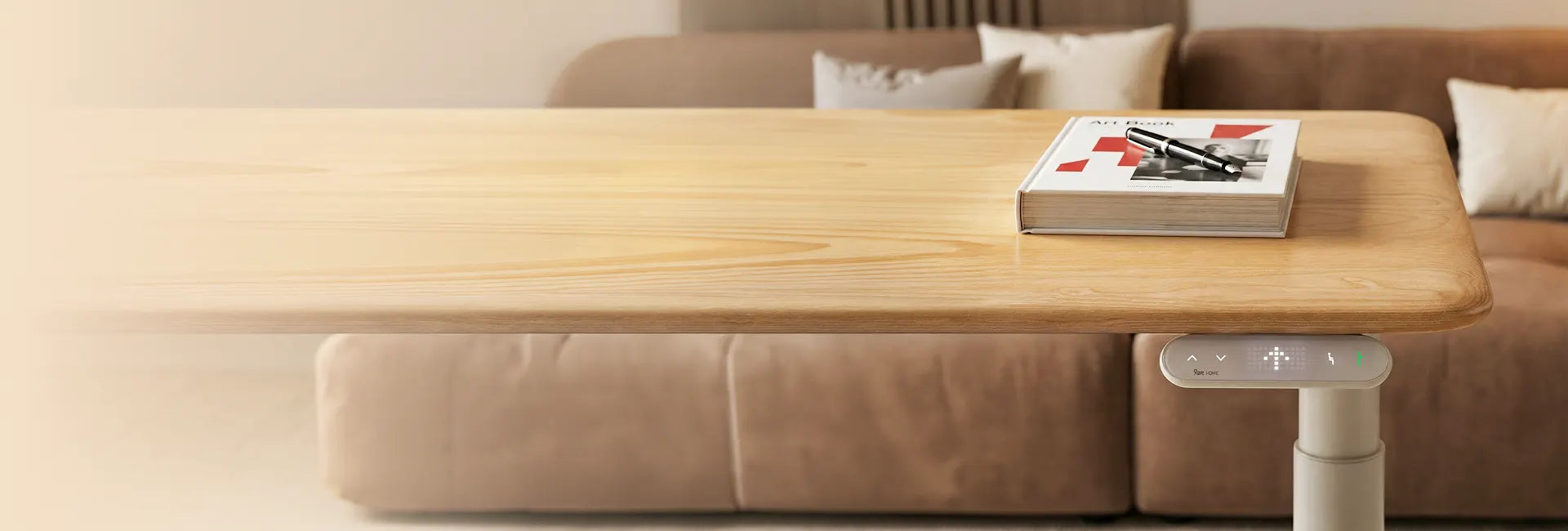

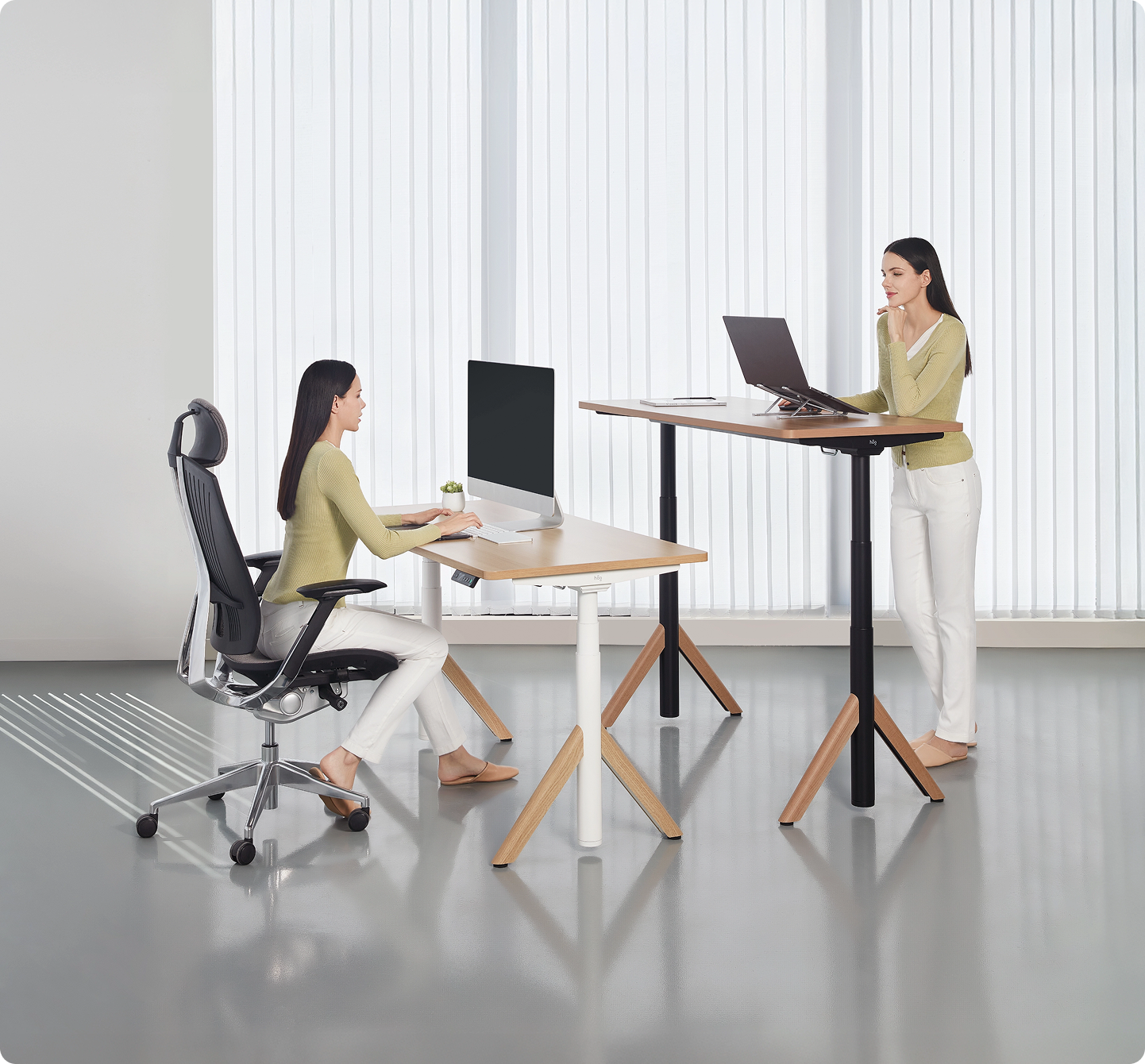
Keep your body moving
A standing desk makes it easier to change positions, break up long periods of sitting and move more naturally throughout the working day.¹

Sit less without changing how you work
A 12-month workplace study found that sit-stand workstations reduced daily sitting time by up to 82 minutes.²

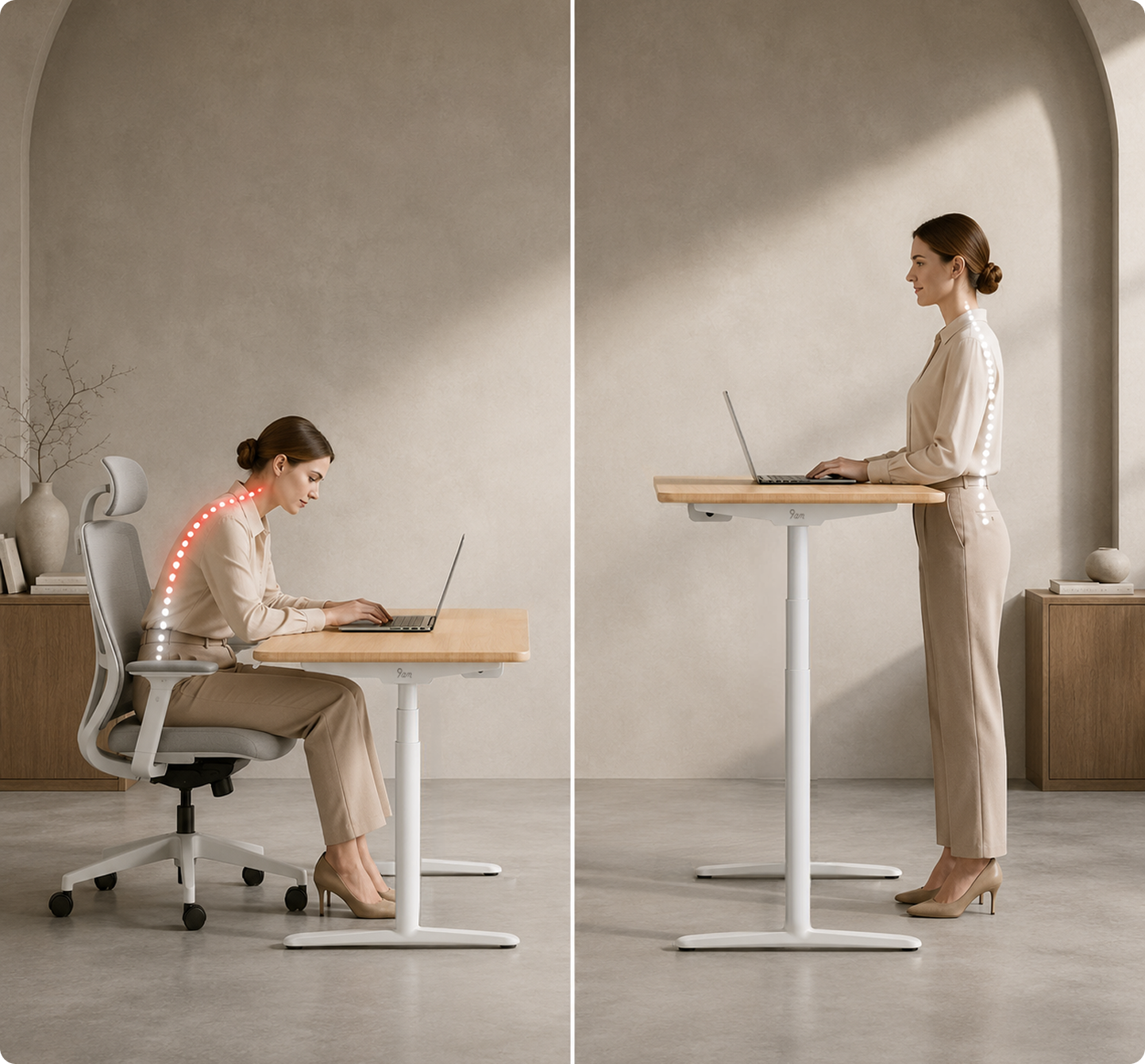
Ease pressure from your neck and back
In the Take-a-Stand Project, participants using a sit-stand desk reported 54% less upper back and neck pain.³

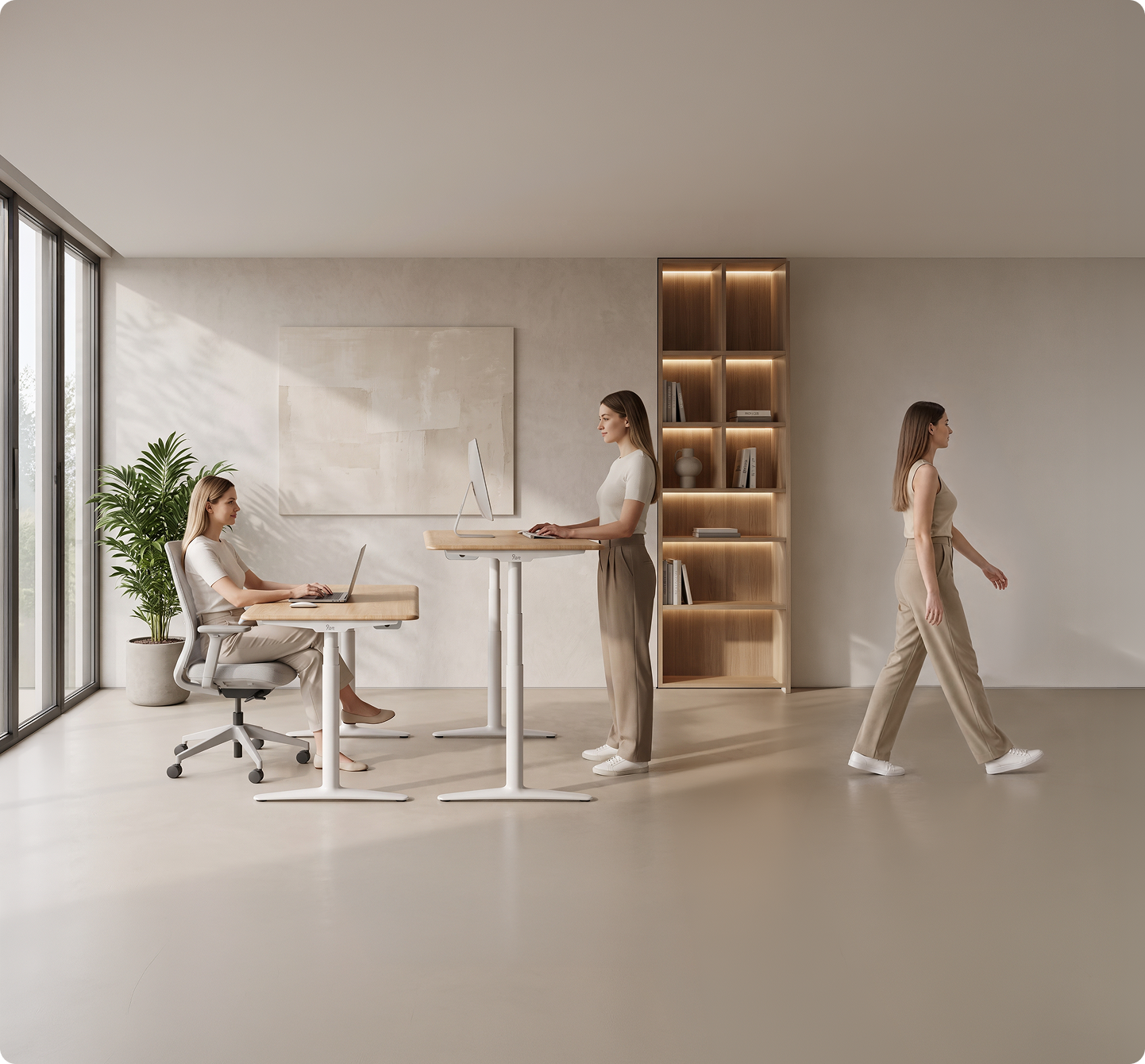
Find your rhythm between sitting and standing
An adjustable standing desk is not designed for standing all day. Switching positions regularly can help you stay comfortable and create a more supportive ergonomic desk setup.⁴
Explore Our Premium Desktop Materials






All our products meet one of the world’s strictest indoor air quality standards for low chemical emissions.

All our products were tested for strength, fatigue resistance, and durability under U.S. industry benchmarks.







Proven Quality, Globally Certified

System
Full-dual-motor

Cycles
20,000 Lift

Travel Speed
38mm/s

Weight Capacity
125kg

Noise Level
<40 dB
Enjoy fast shipping on all items. Delivered in 3-7 business days.

Hassle-free returns to ensure your complete satisfaction.

You can assemble our desk in less than an hour, perfect for fitting into your busy schedule.

Comprehensive warranty coverage to protect your purchases.

Enjoy peace of mind with our customer support, reach out anytime at support@9amhome.com.

Yes — an electric sit-stand desk offers clear advantages for any office desk for home office, especially if you work long hours. The biggest benefit is flexibility: you can switch between sitting and standing instantly, which helps reduce prolonged sitting time. Research shows that sit-stand desks can significantly reduce sitting time and improve overall health, comfort, and work engagement. This simple change can help relieve neck and shoulder pain, improve posture, and support better daily energy levels.
Beyond health, an electric desk also improves productivity and convenience. Compared to a traditional home office desk, it encourages more movement, which has been linked to better focus, increased energy, and improved workplace wellbeing. Features like one-touch height adjustment and memory presets make it easy to maintain an ergonomic setup throughout the day. Overall, it’s not just a comfort upgrade—it’s a long-term investment in both your health and work performance.
When choosing a sit-stand desk, stability should be one of your top priorities. A solid frame ensures that your standing desk remains steady, even at its highest setting, which is especially important when using multiple monitors or heavy equipment. Another key factor is the adjustment mechanism. An electric sit- stand desk is typically preferred because it allows for smooth, precise, and effortless height changes, encouraging users to switch positions more frequently throughout the day.
You should also consider the desk’s height range, weight capacity, and surface area. A larger standing table can provide better organization and workspace flexibility, while features such as memory presets and cable management improve usability. Choosing the right desk involves balancing durability, functionality, and ergonomic support to ensure it meets your daily work needs effectively.
The best size for a standing desk depends on your available space and how you plan to use your office desk for a home office. In general, most ergonomic guidelines recommend a desk width of 120–160 cm (48–63 inches) and a depth of 60–80 cm (24–31 inches) for standard setups. This size provides enough room for a monitor, keyboard, and basic accessories without overcrowding your workspace. If you use multiple monitors or additional equipment, a larger desk up to 180 cm (72 inches) wide can offer better flexibility and organization.
An adjustable standing desk should also match your workflow and usage needs. For minimal setups, a compact desk around 100–120 cm (40–48 inches) wide may be sufficient, while a larger gaming desk or workstation is better for multitasking or creative work. It’s also important to ensure enough depth so your monitor stays at least an arm’s length away for proper ergonomics. Choosing the right size ensures your desk remains comfortable, functional, and adaptable to your daily tasks without feeling cramped.
The correct height for a sit stand desk or electric sit stand desk is essential for maintaining proper ergonomics and preventing strain. Ideally, your elbows should be positioned at a 90-degree angle when typing, and your monitor should be at eye level to reduce neck and shoulder tension. A simple way to estimate the correct desk height is:
Desk height ≈ elbow height when standing (or sitting)
This is a height guide for standing desks (based on user height):
When using a sit-stand desk or stand-up desk, experts recommend switching positions every 20 to 60 minutes. Frequent movement helps improve circulation, reduce stiffness, and maintain energy levels throughout the workday. Staying in one position for too long, whether sitting or standing, can lead to discomfort and reduced productivity.
A sitting desk to standing desk setup allows for easy and quick adjustments, making it easier to build a habit of regular movement. By alternating positions throughout the day, users can reduce strain on their bodies and maintain better focus. The goal is to stay active rather than remain static.
The amount of time you should stand at a standing desk or stand-up desk depends on your comfort level and daily routine. Most experts recommend gradually increasing your standing time, aiming for 2 to 4 hours per day, spread across multiple sessions rather than standing continuously. A practical approach is to start with 15–30 minutes of standing per hour and slowly build up as your body adapts. This helps reduce fatigue while still gaining the benefits of reduced sitting time.
With options like a sit-stand desk officeworks, it becomes easier to switch between sitting and standing throughout the day. Maintaining a balance is key, and many users follow patterns like standing for 20–30 minutes every hour or using the 20-8-2 rule as a guideline. By alternating positions regularly and listening to your body, you can improve comfort, reduce strain, and create a healthier daily workflow without overloading any single posture.
A standing desk or a standing desk setup can help improve posture by encouraging a more upright working position. When your desk and monitor are properly adjusted, your spine remains aligned, and your shoulders stay relaxed. This reduces the tendency to slouch, which is common during prolonged sitting.
Using an adjustable standing desk or sit-stand desk allows you to maintain proper ergonomics in both sitting and standing positions. Combined with regular movement, this can support better posture and reduce discomfort over time, making it a valuable addition to any workspace.
Absolutely, the desk has a weight capacity of up to 125KG, making it ideal for supporting heavy equipment like desktop computers and multiple monitors.